
An introduction to the advantages of ultrasonic level gauges for manholes—save this now!
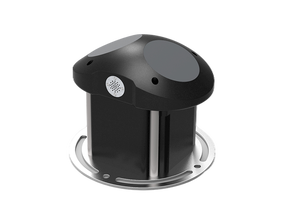
The ultrasonic level gauge for manholes is a reliable, robust, and dependable liquid-level measurement device that can provide long-term, stable level monitoring. Its operating principle is straightforward, and it employs reliable, cost-effective, and low‑maintenance technology, which has contributed to its widespread adoption.
It employs radio‑wave technology, enabling level measurement over long distances and thereby enhancing the efficiency of level monitoring.
It features a simple structure, is easy to use, can be freely assembled, and can be installed in any location, thereby meeting diverse liquid-level detection requirements. Additionally, it enables non-contact level measurement, further satisfying liquid-level monitoring needs.
It can detect multiple liquid levels, meeting diverse level‑measurement requirements, and can measure parameters such as liquid conductivity, static pressure, temperature, as well as liquid level and flow rate.
It boasts high measurement accuracy, meeting diverse liquid-level measurement requirements and achieving millimeter‑level precision.
It enables remote monitoring, allowing real-time tracking of liquid level changes and prompt detection of any fluctuations, so that timely and effective measures can be taken to adjust the level accordingly.
These are the advantages of ultrasonic level gauges for manholes: they can detect liquid levels promptly and accurately, meet diverse level‑measurement requirements, enable remote monitoring, achieve millimeter‑level measurement accuracy, and significantly reduce labor and material costs, making them widely adopted.
An ultrasonic level meter for manholes is a device used to measure liquid levels. It operates by emitting and receiving ultrasonic waves to determine the water level height. The instrument sends an ultrasonic signal into the manhole and then detects the reflected signal, using the time-of-flight of the echo to calculate the water level inside.
The principle of an ultrasonic level meter is based on the physical properties of ultrasound. Ultrasound is a high-frequency sound wave generated by a transducer, which propagates through air or other media and possesses a certain degree of penetration. When an ultrasonic wave encounters an obstacle, it is reflected back; the returning signal is called an echo, and the time interval between the emission and reception of the echo can be used to determine the liquid level height.
Ultrasonic level gauges for manholes offer numerous advantages: they exhibit excellent corrosion resistance, provide accurate measurements of liquid levels, enable real-time monitoring, and are cost-effective with straightforward installation and maintenance. They can operate in contaminated and turbulent environments and are also suitable for remote monitoring.
Technically speaking, the ultrasonic well‑level meter is an advanced liquid‑level measurement device that can accurately track changes in liquid levels, providing critical support for safe monitoring and effective water‑level management. Its use not only reduces operational costs but also enhances efficiency and improves the quality of management.
An ultrasonic level meter for manholes is a device used to measure liquid levels. It operates by emitting and receiving ultrasonic waves to determine the height of the water surface and can be employed for remote monitoring. Its use enhances management quality and efficiency, reduces operational costs, and ensures public safety. As an advanced instrument, the ultrasonic level meter offers a practical, accurate, and reliable method for measuring water levels.
Ultrasonic level meter for manholes
Contact Us
Nanjing Moxing Information Technology Co., Ltd.
-
Company website:www.njmoxing.com
Service Phone:025-86165971
Email:Zengfl@njmoxing.com
Company Address: Room 401, Building 5, Qilin Smart Park, Qilin Subdistrict, Jiangning District, Nanjing City, Jiangsu ProvinceFactory Address: Building 3, Hushu Industrial Park, No. 17 Shengda Road, Jiangning District, Nanjing City
Copyright © 2020 Nanjing Moxing Information Technology Co., Ltd.
All rights reserved.
Website Development:China Enterprise Dynamics Nanjing


Copyright © 2020 Nanjing Moxing Information Technology Co., Ltd.
All rights reserved.
Website Development:China Enterprise Dynamics Nanjing
Add friend for consultation
Scan it
-
-
QQ Consultation
-
Leave a Message Online
-
Product Center
